Why Chronic Inflammation Is Linked to Certain Cancers
How long-lasting immune activation from infections, bowel disease, and obesity can create conditions that help tumors take hold
Key Takeaways
- •Chronic inflammation is a prolonged state of immune activation that can persist for months or years, unlike normal short-term inflammation that resolves after healing.
- •Long-standing inflammation is now understood as one of several enabling conditions that help tumors acquire the traits needed to grow and spread, rather than a direct, sole cause of cancer.
- •The NF-κB signaling pathway is a key molecular link between chronic inflammatory signals and the survival of cells that should otherwise die.
- •Immune cells called tumor-associated macrophages can be reprogrammed within a tumor's environment to support its growth and spread instead of attacking it.
- •Specific chronic conditions carry documented cancer risks tied to inflammation: long-standing ulcerative colitis and colorectal cancer, Helicobacter pylori infection and stomach cancer, and chronic hepatitis B or C infection and liver cancer.
- •Obesity is associated with chronic low-grade systemic inflammation linked to an increased risk of several cancer types.
- •Long-term follow-up of randomized aspirin trials has shown an association between regular aspirin use and reduced long-term cancer mortality, but this is not a basis for self-directed aspirin use.
- •Most people living with chronic inflammatory conditions never develop cancer, underscoring that inflammation is one contributing factor among many.
Inflammation is usually a sign that the body is working correctly. A cut gets red and swollen, immune cells rush in, the wound heals, and the swelling fades within days. That is acute inflammation, and it is protective.
Chronic inflammation is different. It is a prolonged state of immune activation that can persist for months or years, often without the redness or pain people associate with the word "inflammation." Instead of resolving, the immune response keeps simmering in the background, sometimes in a single organ, sometimes throughout the whole body.
The idea that this kind of long-term irritation could lead to cancer is not new. In the 19th century, the physician Rudolf Virchow noticed that tumors often arose at sites of chronic irritation and proposed a connection between the two, long before anyone understood genes or cell signaling. Modern research has since treated chronic inflammation as one of several enabling conditions that help cancer cells acquire the traits they need to grow, survive, and spread, rather than a direct cause on its own.
How a Persistent Immune Response Can Favor Tumor Growth
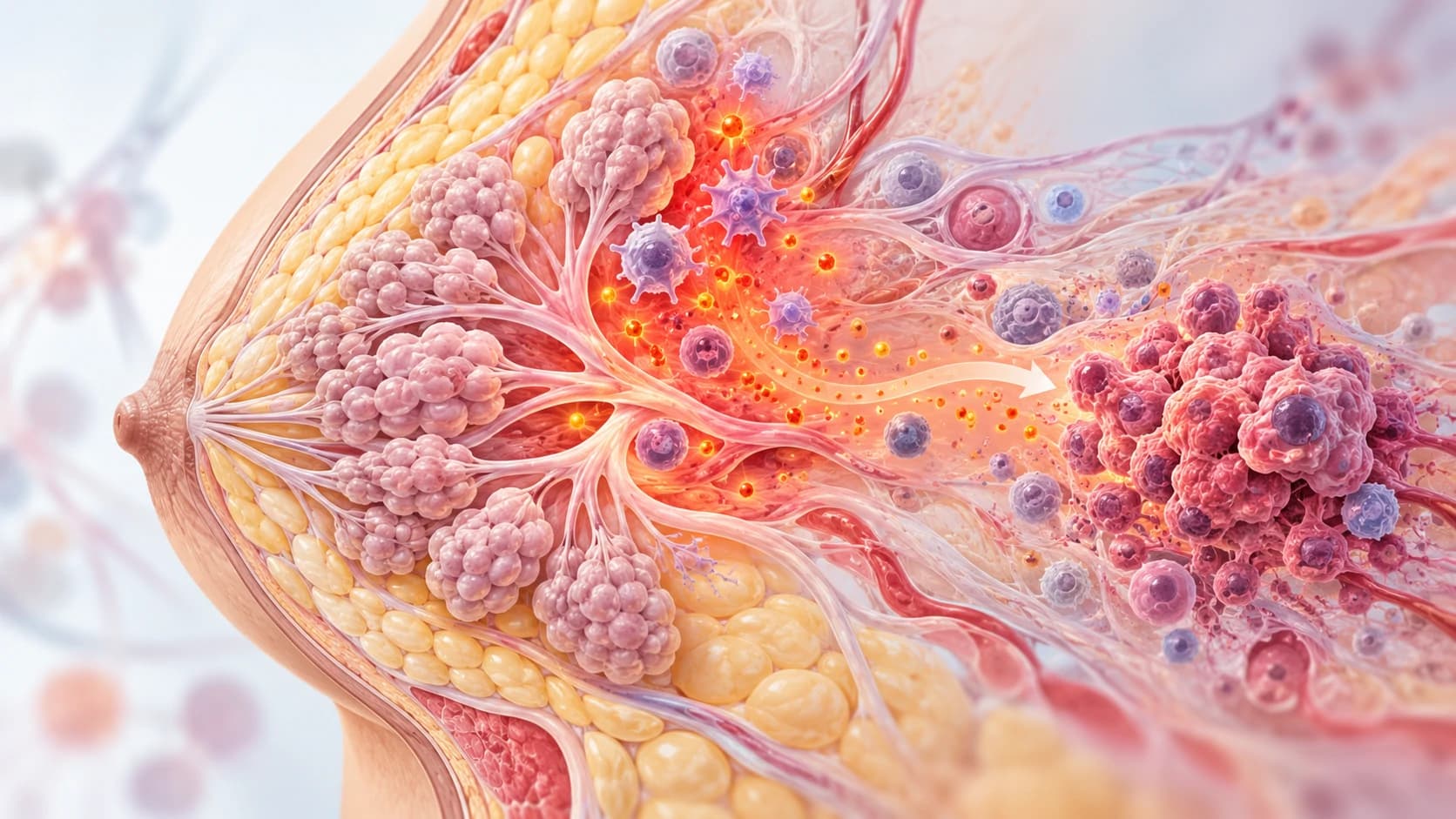
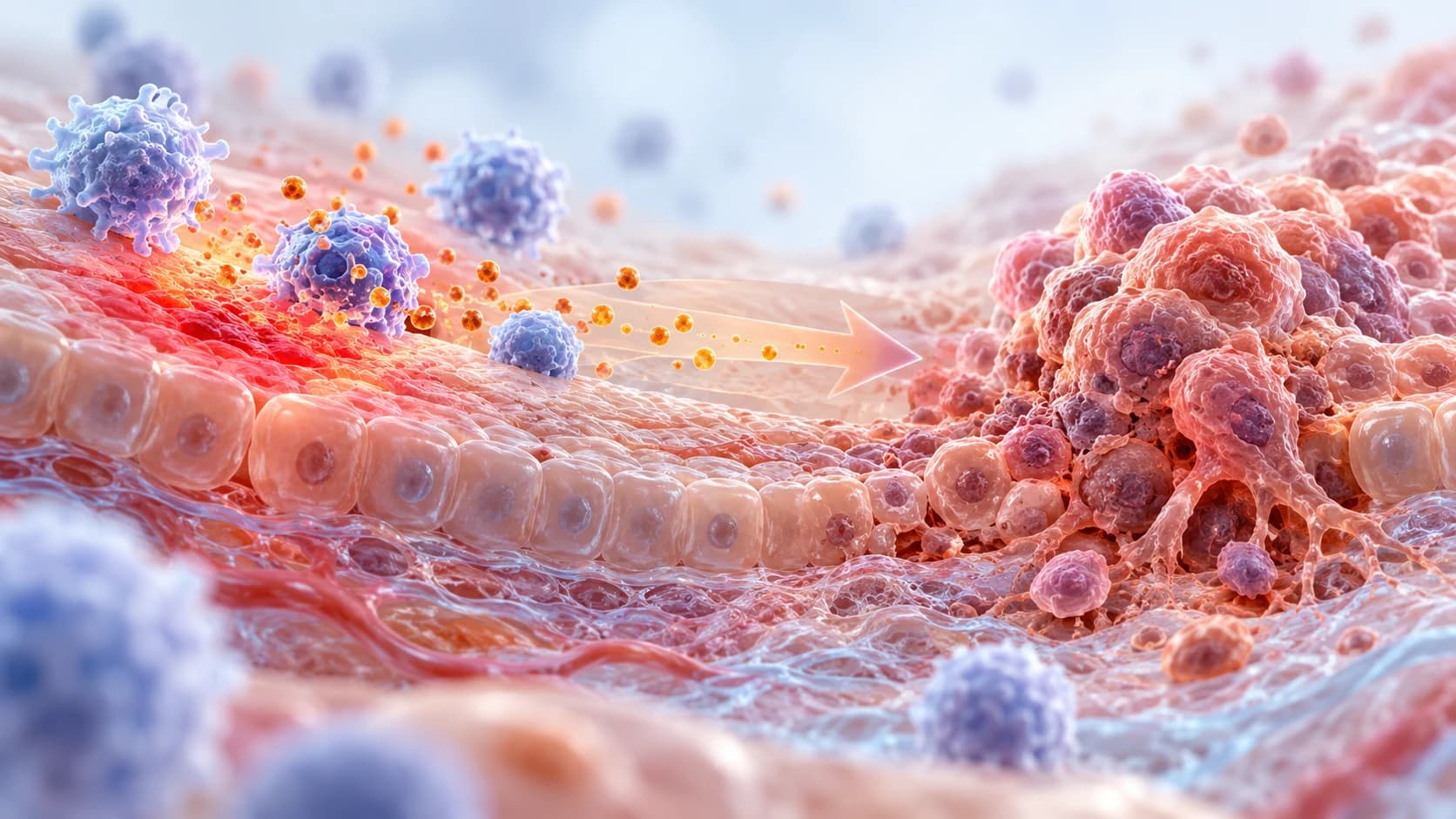
When inflammation becomes chronic, the tissue environment changes. Immune cells and the tumor microenvironment, the mix of cells, blood vessels, and signaling molecules that surrounds a developing tumor, begin producing a steady stream of cytokines, small proteins cells use to communicate with each other. In short bursts these signals coordinate healing. Sustained over years, they can instead encourage nearby cells to divide more often and resist the normal signals that would tell a damaged cell to die.
One of the central molecular links between inflammation and tumor growth is a signaling system called the NF-κB pathway. Under normal conditions, NF-κB flips on briefly during an immune response and then switches back off. When inflammatory stimuli are chronic, NF-κB can stay switched on in surrounding cells, and this prolonged activity helps malignant cells survive stresses that would normally kill them. Research in mouse models of liver inflammation showed that this pathway can act as a genuine tumor promoter, not just a bystander of the inflammatory process.
When Immune Cells End Up Helping the Tumor Instead of Fighting It
Macrophages are immune cells whose job is normally to clear out damaged tissue, debris, and invading microbes. Inside a chronically inflamed tumor environment, though, some macrophages get recruited and effectively reprogrammed. Instead of attacking the abnormal cells around them, these tumor-associated macrophages can end up supporting tumor growth, helping new blood vessels form, and assisting cancer cells in invading nearby tissue and spreading elsewhere in the body.
It is a bit like calling in firefighters who, once on scene, start feeding the flames instead of putting them out. This does not mean the immune system is generally working against the body. It means that within a tumor's specific chemical environment, the normal rules of immune behavior can be subverted.
Specific Diseases and Infections That Create These Conditions
Several well-studied chronic conditions illustrate how this plays out in real tissue. People with long-standing ulcerative colitis, a chronic inflammatory bowel disease, face a measurably increased long-term risk of colorectal cancer, a pattern first documented in population-based studies decades ago. The repeated cycles of tissue damage and repair in the inflamed bowel lining appear to create fertile ground for the kind of cellular changes that lead to cancer.
Infections tell a similar story in other organs. Chronic infection with the bacterium Helicobacter pylori causes long-term inflammation of the stomach lining and substantially raises the risk of stomach cancer. Persistent infection with hepatitis B or C virus drives ongoing liver inflammation that is a major contributor to liver cancer worldwide. Taken together, chronic infections of this kind are estimated to account for a substantial share of cancers diagnosed globally, which is part of why controlling infections like these is considered a meaningful piece of cancer prevention efforts.
Obesity adds a less visible version of the same pattern. Excess body fat is associated with a state of chronic, low-grade inflammation that circulates throughout the body rather than sitting in one organ, and this systemic inflammation has been linked to an increased risk of several different cancer types. Unlike an infection or a bowel disease, there is no single inflamed site to point to, which is part of why the connection took longer to establish.
Does Reducing Inflammation Actually Lower Cancer Risk?
If chronic inflammation helps enable cancer, an obvious question follows: does blocking it protect against cancer? The clearest evidence so far comes from long-term follow-up of randomized trials of daily aspirin, a drug that reduces inflammatory signaling by blocking COX enzymes involved in producing inflammatory molecules. Pooled data from patients originally enrolled in these trials for other reasons showed an association between regular aspirin use and reduced long-term cancer mortality.
That finding is genuinely interesting, but it comes with real limits. These trials were not designed specifically to test aspirin as a cancer prevention strategy, and aspirin carries its own risks, including bleeding, that have to be weighed against any potential benefit. This evidence does not support starting aspirin on your own to lower cancer risk, and it says nothing about diets, supplements, or lifestyle changes marketed as anti-inflammatory cures.
What This Does, and Doesn't, Mean for Patients
Chronic inflammation is one contributing factor among many that can shape whether and how cancer develops, not a guaranteed cause. The large majority of people living with inflammatory bowel disease, chronic hepatitis, or obesity never develop cancer. What the evidence shows is a pattern: tissues under prolonged inflammatory stress are more vulnerable to the kind of cellular changes that cancer exploits, through pathways like NF-κB and cells like tumor-associated macrophages that can be turned toward the tumor's advantage.
Understanding that pattern has already shaped medical practice, from closer cancer screening in people with long-standing colitis to the push to treat hepatitis infections and curb H. pylori. Whether more targeted ways of calming chronic inflammation can meaningfully lower cancer risk in otherwise healthy people remains an active and still unsettled question.
Common Questions
References
- Douglas Hanahan, Robert A. Weinberg (2011). Hallmarks of Cancer: The Next Generation
- Alberto Mantovani, Paola Allavena, Antonio Sica, Frances Balkwill (2008). Cancer-related inflammation
- M. Karin (2009). NF- B as a Critical Link Between Inflammation and Cancer
- Eli Pikarsky, Rinnat M. Porat, Ilan Stein, Rinat Abramovitch, Sharon Amit, Shafika Kasem, Elena Gutkovich-Pyest, Simcha Urieli-Shoval, Eithan Galun, Yinon Ben-Neriah (2004). NF-κB functions as a tumour promoter in inflammation-associated cancer
- Anders Ekbom, Charles Helmick, Matthew Zack, Hans-Olov Adami (1990). Ulcerative Colitis and Colorectal Cancer
- (2012). Global burden of cancers attributable to infections in 2008: a review and synthetic analysis.
- Hashem B. El-Serag (2012). Epidemiology of Viral Hepatitis and Hepatocellular Carcinoma
- Andrew G Renehan, Margaret Tyson, Matthias Egger, Richard F Heller, Marcel Zwahlen (2008). Body-mass index and incidence of cancer: a systematic review and meta-analysis of prospective observational studies
- Bin-Zhi Qian, Jeffrey W. Pollard (2010). Macrophage Diversity Enhances Tumor Progression and Metastasis
- (2011). Effect of daily aspirin on long-term risk of death due to cancer: analysis of individual patient data from randomised trials.
- Fran Balkwill, Alberto Mantovani (2001). Inflammation and cancer: back to Virchow?
- Donald Maxwell Parkin (2006). The global health burden of infection‐associated cancers in the year 2002
Team Review: This article has been reviewed by Canceria Research Team