Stopping Cervical Cancer Before the Virus Gets a Foothold
How HPV vaccines block the infection responsible for nearly all cervical cancers, and what decades of trial and real-world data show about their protection
Key Takeaways
- •Virtually all cervical cancer cases are linked to persistent infection with high-risk types of HPV, making it an unusually clear single-cause cancer.
- •HPV's E6 and E7 proteins disable the cell's p53 and Rb safeguards, letting infected cells divide when they normally would stop.
- •Most HPV infections clear naturally within one to two years; cancer risk comes mainly from infections that persist rather than from exposure alone.
- •HPV vaccines use virus-like particles to trigger protective antibodies without causing infection, so they prevent new infection but cannot treat an infection someone already has.
- •Randomized trials showed vaccination substantially reduces high-grade precancerous cervical lesions caused by vaccine-targeted HPV types.
- •Twelve-year follow-up data show durable protection with no sign of fading, and national registry studies confirm reduced invasive cervical cancer, with the greatest benefit in those vaccinated at younger ages.
- •Vaccination programs create herd effects, reducing HPV-related disease even among people who were never vaccinated.
- •Because current vaccines don't cover every cancer-causing HPV type, routine cervical cancer screening remains essential even for vaccinated people.
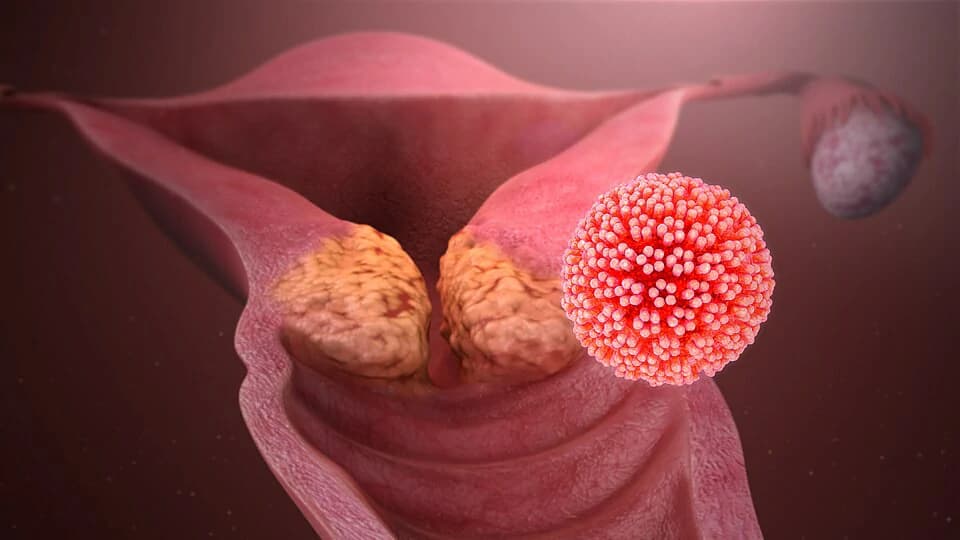
Cervical cancer was once a disease without an obvious single cause. That changed once researchers identified a near-universal culprit: human papillomavirus, or HPV, a virus spread through skin-to-skin and sexual contact. Understanding that connection reshaped how doctors think about prevention. It also made something remarkable possible: a vaccine that can stop a cancer before the infection driving it ever takes hold.
A Virus Behind Almost Every Cervical Cancer
Large studies examining cervical cancer tissue from around the world found HPV DNA in virtually every sample tested. That is an extraordinary finding; few cancers trace back to a single, identifiable trigger this cleanly. Researchers went on to classify which HPV types carry the highest risk, singling out a handful of strains, including types 16 and 18, as the main drivers of cervical cancer worldwide. This work reframed cervical cancer as, at its core, a long-term consequence of a persistent viral infection.
How an Infection Can Quietly Turn Cancerous
HPV does its damage through two small viral proteins called E6 and E7. Healthy cells rely on built-in safeguards to stop damaged or abnormal cells from multiplying, centered on two proteins called p53 and the retinoblastoma protein, or Rb. Think of them as a cell's brakes and its emergency shut-off switch. E6 helps break down p53, while E7 disables Rb, removing both safeguards at once. With its brakes gone, an infected cell can keep dividing when it should stop, accumulating damage over years until some descendants become fully cancerous. This is a slow process, unfolding over years, not weeks.
Why Most Infections Fade Rather Than Fester
Despite how common HPV is, most infections cause no lasting harm. Long-term studies following young women found that most HPV infections clear naturally within one to two years, as the immune system eventually recognizes and eliminates the virus. Meaningful cancer risk builds up only when an infection with a high-risk type fails to clear and instead persists for years. Persistence, not mere exposure, is the critical factor. That distinction explains why an HPV diagnosis is common and rarely alarming on its own, while a persistent high-risk infection deserves ongoing monitoring.
A Vaccine That Mimics the Virus Without Causing Infection
HPV vaccines rest on a simple idea. They are built from virus-like particles, or VLPs: empty protein shells assembled to look like HPV's outer coat, but with no genetic material inside. The immune system reacts to these particles as though they were a real infection, producing antibodies that can recognize and neutralize the virus. But because there is nothing to actually infect, no illness ever follows. If a vaccinated person is later exposed to HPV, those antibodies intercept the virus before it can establish an infection. This is why the vaccine is purely preventive: it cannot clear an infection someone already has, and it has no effect on cells that have already become precancerous.
What the Clinical Trials Showed
Randomized controlled trials tested this mechanism directly. Young women received either an HPV vaccine or a comparison product, then researchers tracked their cervical health for years afterward. Vaccinated participants developed substantially fewer high-grade precancerous lesions, graded as CIN2 or CIN3, caused by the HPV types the vaccine targeted. These lesions matter because, left untreated, a portion progress to invasive cancer over years or decades. Blocking their formation was the clearest trial-level evidence that vaccination could interrupt cervical cancer's development long before it begins.
Does the Protection Last?
A vaccine that wears off within a few years would offer limited value against a cancer that can take decades to develop. Fortunately, follow-up studies tracking vaccinated women for twelve years across several Nordic countries found durable protection against infection and precancerous lesions, with no sign that effectiveness was fading over time.
From Precancer to Cancer: Population-Level Confirmation
Trials measure precancerous lesions partly because waiting for actual cancer cases to accumulate takes far too long; cervical cancer typically develops ten to twenty years after a persistent infection takes hold. Two large national studies have since closed that gap. A nationwide registry analysis in Sweden, linking vaccination records to cancer outcomes, found that vaccination was associated with a significantly lower risk of invasive cervical cancer. The people who benefited most were those vaccinated at younger ages, before adolescence. A separate study following England's national vaccination program found measurable reductions in both high-grade cervical lesions and invasive cervical cancer at the population level, years after the program began. Together, these findings confirm what the earlier trials predicted.
Protection That Reaches Beyond the Vaccinated
Vaccination programs don't only protect the people who receive the shot. A meta-analysis combining data across countries with established HPV vaccination programs found reduced HPV infection and related disease even among unvaccinated people, a pattern known as a herd effect. When enough of a population is immune, the virus simply has fewer opportunities to spread, indirectly sheltering those who were never vaccinated themselves.
Why Timing Matters
The strongest protection appears in people vaccinated before they are ever exposed to HPV, typically before sexual activity begins. That timing follows directly from how the vaccine works. Since it prevents new infection rather than treating an existing one, its antibodies need to already be in place before the virus arrives. Once someone has been infected with a particular high-risk type, vaccination offers no benefit against that specific strain, though it may still protect against others they haven't encountered. This is the scientific reasoning behind recommending vaccination before sexual debut, when the immune system still has a clean opportunity to build defenses.
Why Screening Still Matters
None of this makes screening unnecessary. Current vaccines target the HPV types responsible for most, but not all, cervical cancers, so some risk remains even after vaccination. The long gap between infection and cancer also means population-level drops in actual cancer cases take many years to appear, since people infected before a vaccination program began still carry that earlier risk forward. For these reasons, routine cervical cancer screening, through Pap tests or HPV testing, remains an essential complement to vaccination rather than a step it replaces. Prevention through vaccination and early detection through screening address the same disease at two different points along its long natural history.
Common Questions
References
- Jan M. M. Walboomers, Marcel V. Jacobs, M. Michele Manos, F. Xavier Bosch, J. Alain Kummer, Keerti V. Shah, Peter J. F. Snijders, Julian Peto, Chris J. L. M. Meijer, Nubia Mu�oz (1999). Human papillomavirus is a necessary cause of invasive cervical cancer worldwide
- Nubia Muñoz, F. Xavier Bosch, Silvia de Sanjosé, Rolando Herrero, Xavier Castellsagué, Keerti V. Shah, Peter J.F. Snijders, Chris J.L.M. Meijer (2003). Epidemiologic Classification of Human Papillomavirus Types Associated with Cervical Cancer
- (2002). Papillomaviruses and cancer: from basic studies to clinical application.
- Gloria Y.F. Ho, Robert Bierman, Leah Beardsley, Chee J. Chang, Robert D. Burk (1998). Natural History of Cervicovaginal Papillomavirus Infection in Young Women
- (2012). Understanding and learning from the success of prophylactic human papillomavirus vaccines.
- Diane M Harper, Eduardo L Franco, Cosette Wheeler, Daron G Ferris, David Jenkins, Anne Schuind, Toufik Zahaf, Bruce Innis, Paulo Naud, Newton S De Carvalho, Cecilia M Roteli-Martins, Julio Teixeira, Mark M Blatter, Abner P Korn, Wim Quint, Gary Dubin (2004). Efficacy of a bivalent L1 virus-like particle vaccine in prevention of infection with human papillomavirus types 16 and 18 in young women: a randomised controlled trial
- (2018). A 12-Year Follow-up on the Long-Term Effectiveness of the Quadrivalent Human Papillomavirus Vaccine in 4 Nordic Countries.
- Jiayao Lei, Alexander Ploner, K. Miriam Elfström, Jiangrong Wang, Adam Roth, Fang Fang, Karin Sundström, Joakim Dillner, Pär Sparén (2020). HPV Vaccination and the Risk of Invasive Cervical Cancer
- Milena Falcaro, Alejandra Castañon, Busani Ndlela, Marta Checchi, Kate Soldan, Jamie Lopez-Bernal, Lucy Elliss-Brookes, Peter Sasieni (2021). The effects of the national HPV vaccination programme in England, UK, on cervical cancer and grade 3 cervical intraepithelial neoplasia incidence: a register-based observational study
- Mélanie Drolet, Élodie Bénard, Norma Pérez, Marc Brisson (2019). Population Level-Impact and Herd Effects Following the Introduction of Human Papillomavirus Vaccination Programmes: Updated Systematic Review and Meta-analysis
Team Review: This article has been reviewed by Canceria Research Team